

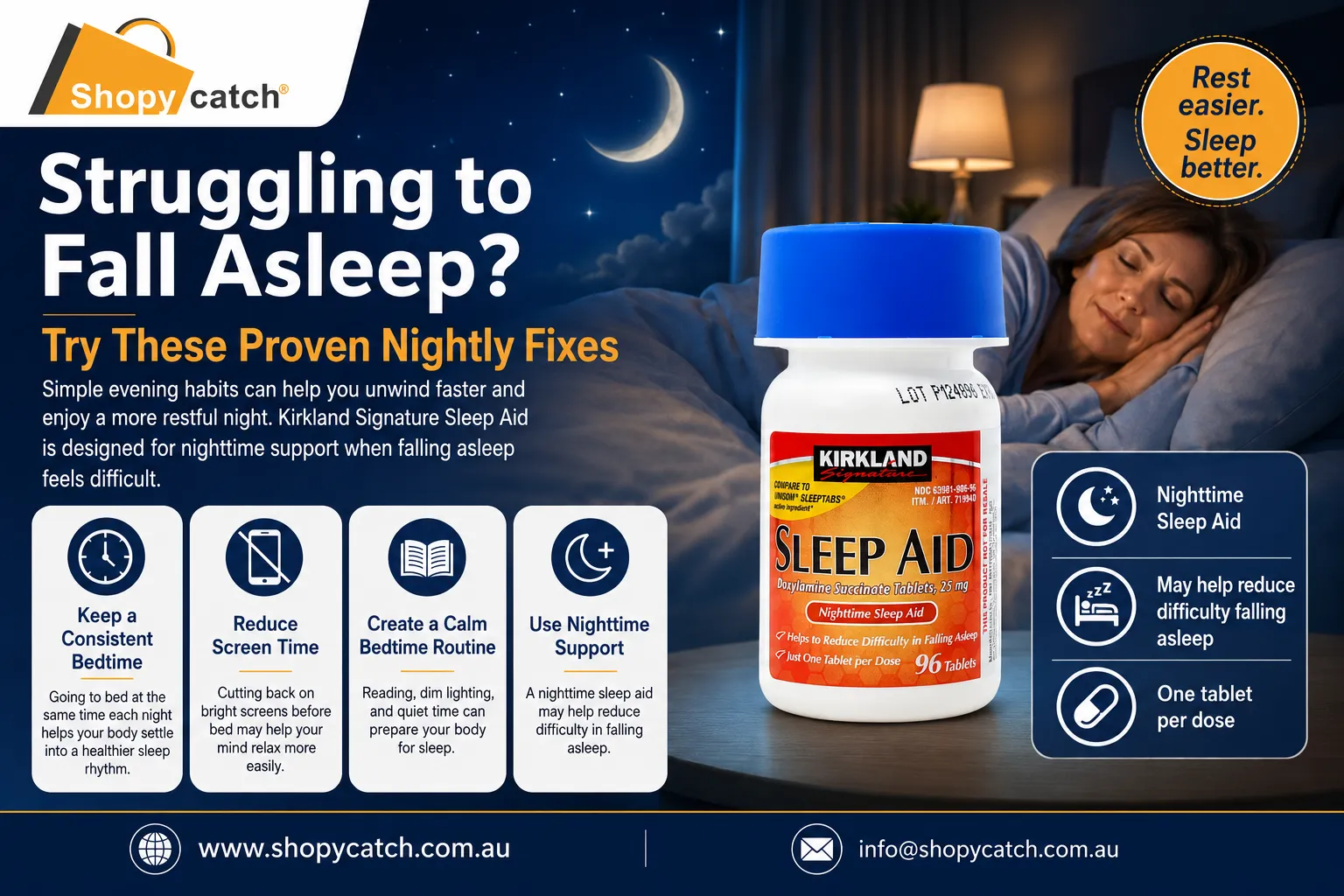
Lying awake at night can feel frustrating, lonely, and exhausting. You go to bed tired, but your mind keeps racing. You check the time, turn over again, adjust your pillow, and wonder why sleep feels so difficult. By morning, you may feel heavy, foggy, irritable, and dependent on caffeine just to get through the day.
Occasional sleeplessness is common, especially for busy adults dealing with stress, screen time, irregular routines, shift work, family responsibilities, or travel. The good news is that better sleep often starts with small nightly changes. You do not always need a complicated routine. In many cases, improving your evening habits, sleep environment, and relaxation pattern can help your body feel ready for rest.
For people who need short-term support, over-the-counter products such as kirkland sleep aid Australia are also commonly searched by Australians looking for convenient sleep support options online.
This guide shares practical nightly fixes that may help you fall asleep more easily, stay asleep longer, and wake up feeling more refreshed.
Why Falling Asleep Can Feel So Hard
Sleep is controlled by several signals in the body. Your brain responds to light, temperature, routine, stress, food timing, caffeine, and hormones. When these signals are out of rhythm, your body may feel tired but still not ready to sleep.
Many people think sleep begins the moment they get into bed. In reality, good sleep often begins hours earlier. What you do after dinner can strongly influence how quickly you fall asleep.
Common reasons people struggle to fall asleep include:
-
Too much screen exposure at night
-
Drinking caffeine too late in the day
-
Stress and overthinking
-
Irregular sleep and wake times
-
Heavy meals close to bedtime
-
Alcohol disrupting sleep quality
-
Bedroom temperature being too warm
-
Lack of a calming wind-down routine
-
Using the bed for work, scrolling, or watching TV
If sleeplessness becomes frequent or severe, it is important to speak with a healthcare professional. Sleep problems may sometimes be linked with anxiety, depression, pain, medication effects, sleep apnea, hormonal changes, or other health concerns.
Fix 1: Create a Consistent Sleep Window
Your body likes rhythm. Going to bed and waking up at different times every day can confuse your internal clock. A consistent sleep window helps train your brain to expect sleep at a similar time each night.
Try choosing a realistic bedtime and wake-up time that you can maintain most days, including weekends. You do not need to be perfect, but consistency matters.
Simple Sleep Timing Example
|
Sleep Habit |
Better Option |
|
Sleeping at random times |
Choose a regular bedtime |
|
Sleeping in very late on weekends |
Keep wake time within 1 hour |
|
Napping too long during the day |
Keep naps short and early |
|
Going to bed before feeling sleepy |
Start winding down first |
The goal is to make sleep feel predictable. When your body recognises the routine, falling asleep may become easier.
Fix 2: Stop Caffeine Earlier Than You Think
Caffeine can stay active in the body for several hours. Even if you can drink coffee in the afternoon and still fall asleep, your sleep quality may be affected.
Coffee, black tea, green tea, cola, energy drinks, chocolate, and pre-workout supplements may all contain caffeine. If you struggle to fall asleep, try avoiding caffeine after midday for two weeks and observe the difference.
For many people, the issue is not the morning coffee. It is the second or third caffeine hit later in the day.
Fix 3: Build a 30-Minute Wind-Down Routine
A wind-down routine tells your brain that the active part of the day is ending. It does not need to be complicated. The best routine is one you can repeat.
A simple 30-minute routine may include:
-
Dimming bright lights
-
Putting your phone away
-
Taking a warm shower
-
Stretching gently
-
Reading a calming book
-
Listening to soft music
-
Practising slow breathing
-
Preparing clothes or lunch for the next day
Avoid using this time for work emails, intense conversations, online shopping, or social media arguments. Your nervous system needs a clear signal that it is safe to relax.
Fix 4: Reduce Screen Light and Mental Stimulation
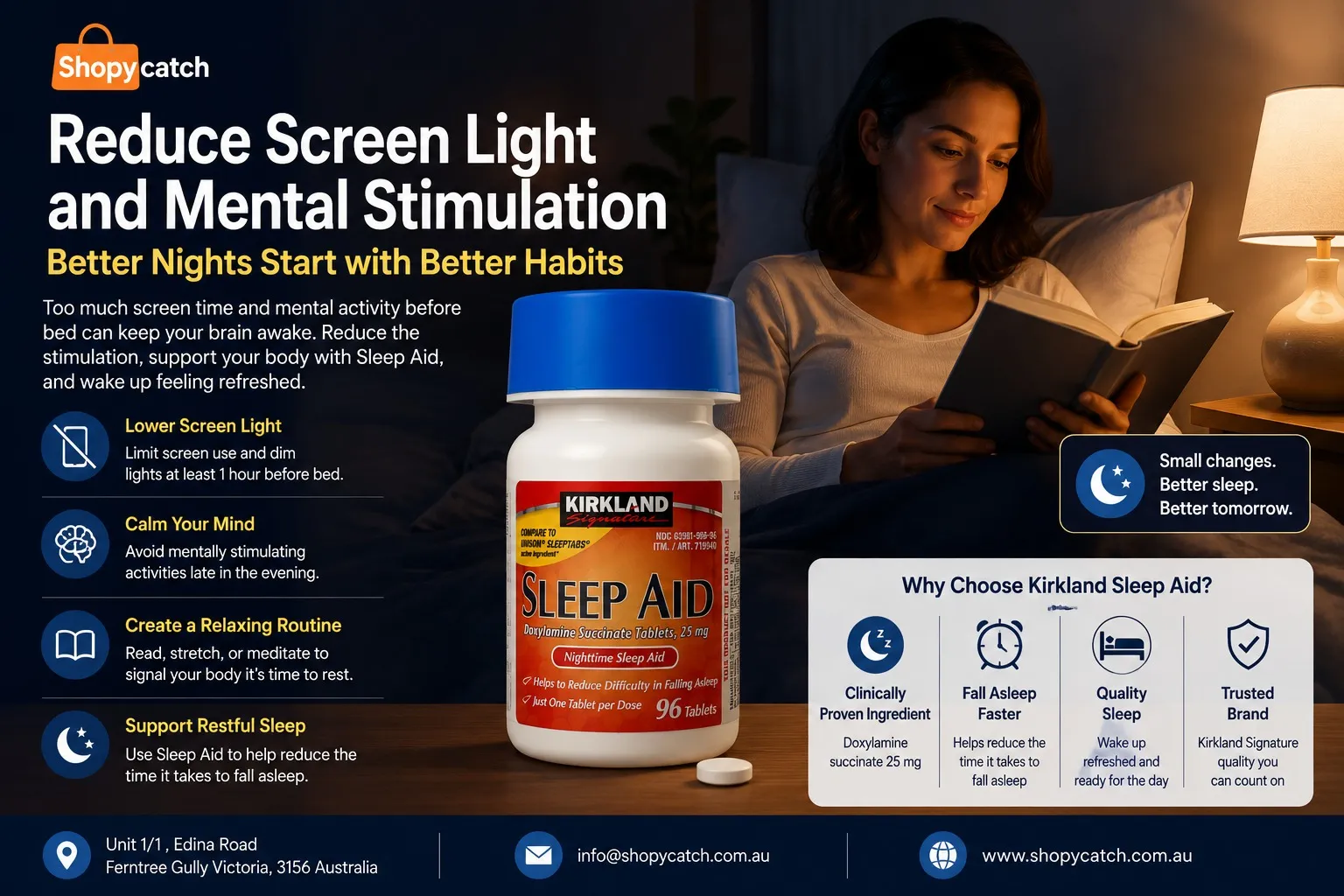
Screens are one of the biggest sleep disruptors. Phones, tablets, laptops, and TVs can expose your eyes to bright light and keep your brain mentally active.
Even if you use night mode, the content itself can be stimulating. News, social media, videos, messages, and work notifications can keep your brain alert.
Try this approach:
|
Time Before Bed |
What to Do |
|
2 hours before |
Finish stressful tasks if possible |
|
1 hour before |
Dim lights and reduce screens |
|
30 minutes before |
Keep phone away from bed |
|
Bedtime |
Use bed only for sleep and intimacy |
If you use your phone as an alarm, place it across the room. This helps reduce late-night scrolling and makes it easier to get up in the morning.
Fix 5: Keep the Bedroom Cool, Dark, and Quiet
Your sleep environment matters. A bedroom that is too bright, warm, noisy, or cluttered can make it harder to relax.
Aim for a room that feels cool, dark, and calm. Use blackout curtains, an eye mask, earplugs, a fan, or white noise if needed. Make sure your pillow and mattress support your body comfortably.
Small bedroom improvements can make a big difference, especially if you are sensitive to light or sound.
Fix 6: Eat Lighter at Night
A heavy meal close to bedtime may make it harder to fall asleep. Your body has to focus on digestion when it should be winding down.
Try eating dinner earlier when possible. If you need a snack before bed, choose something light and simple. Avoid large portions, spicy foods, high-sugar desserts, and heavy fried meals late at night.
Better evening snack options may include:
-
Greek yoghurt
-
A banana
-
A small handful of nuts
-
Wholegrain toast
-
Herbal tea
-
A boiled egg
-
Oats in a small portion
The goal is to avoid going to bed overly full or uncomfortably hungry.
Fix 7: Do Not Use Alcohol as a Sleep Tool
Alcohol may make you feel sleepy at first, but it can reduce sleep quality later in the night. Many people wake up at 2 or 3 a.m. after drinking alcohol in the evening.
If you struggle to fall asleep or stay asleep, reduce alcohol close to bedtime. You may notice deeper, more refreshing sleep within a few nights.
Fix 8: Write Down Your Worries
A racing mind is one of the most common reasons people cannot fall asleep. Your brain may replay the day, plan tomorrow, or worry about things you cannot solve at midnight.
Try a “brain dump” before bed. Write down:
-
Tasks for tomorrow
-
Worries on your mind
-
Things you need to remember
-
One small action you can take the next day
-
Three things that went well today
This helps move thoughts out of your head and onto paper. It also gives your brain permission to rest.
Fix 9: Try Slow Breathing
Slow breathing can help calm the nervous system. You do not need special equipment or training.
Try this simple method:
-
Inhale slowly through your nose for 4 seconds.
-
Hold gently for 2 seconds.
-
Exhale slowly for 6 seconds.
-
Repeat for 5 minutes.
The long exhale is especially helpful because it encourages relaxation. Use it while lying in bed or during your wind-down routine.
Where Sleep Aid Products May Fit
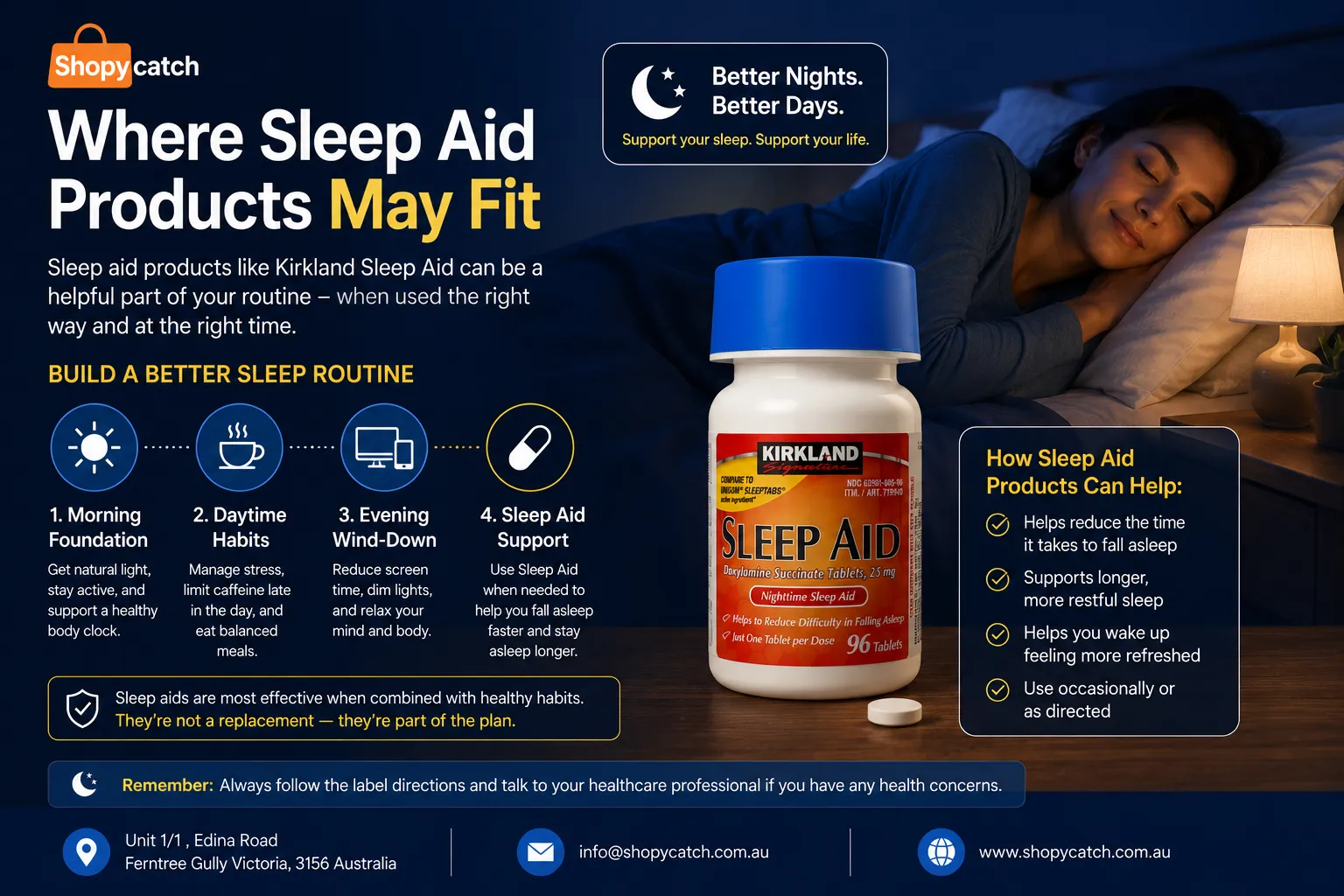
Healthy habits should always be the foundation of better sleep. However, some people occasionally need extra short-term support, especially during stressful periods, travel, shift changes, or temporary sleeplessness.
This is why many people search for kirklands sleep aid. They are commonly used by adults looking for temporary support for occasional sleeplessness.
At ShopyCatch, Kirkland Night Aid 25mg Sleep Aid Australia is listed as a 192-tablet product. It is positioned for people struggling with occasional sleeplessness or restless nights. ShopyCatch also offers convenient online ordering for Australian customers, making it easier to access sleep support products without searching multiple stores.
What Is Kirkland Sleep Aid?
Kirkland Sleep Aid is an over-the-counter sleep support product commonly available in tablet form. ShopyCatch lists Kirkland Night Aid 25mg as a sleep aid option for occasional sleeplessness.
It is important to use sleep-aid products only as directed on the label. They are not designed to replace healthy sleep habits or treat long-term sleep disorders. If sleep problems continue, speak with a healthcare professional.
Possible Benefits of Kirkland Sleep Aid
-
May help with occasional difficulty falling asleep
-
Convenient tablet format
-
Over-the-counter availability
-
Useful for short-term sleep support
-
Available online through ShopyCatch Australia
-
Large 192-tablet pack listed on ShopyCatch
-
Good value for customers looking for sleep support options
Why Buy Kirkland Sleep Aid From ShopyCatch?
ShopyCatch is an Australian online store offering health, wellness, supplement, personal care, and sleep support products. For customers searching for kirkland sleep aid australia, ShopyCatch provides a convenient way to browse and buy online.
ShopyCatch Advantages
|
ShopyCatch Feature |
Customer Benefit |
|
Australian online store |
Convenient shopping for local customers |
|
Sleep aid product range |
Easier to compare options |
|
Kirkland Night Aid availability |
Direct access to a popular product |
|
Free shipping offers |
Better value on orders |
|
30-day return or exchange support |
More confidence when shopping |
|
Online customer support |
Help available when needed |
|
Discount offers |
Extra savings on selected purchases |
ShopyCatch also stocks other wellness and supplement products, making it useful for customers who want to shop across different health categories in one place.
How to Use Sleep Aids Responsibly
Sleep aids can be helpful for occasional sleeplessness, but they should be used carefully.
Important safety tips:
-
Always read and follow the label directions.
-
Do not exceed the recommended dose.
-
Avoid mixing sleep aids with alcohol.
-
Do not drive or operate machinery after use.
-
Speak with a healthcare professional if you take medication.
-
Avoid long-term use unless advised by a healthcare provider.
-
Do not use it if pregnant, breastfeeding, or managing a medical condition without professional advice.
If you feel dependent on sleep aids to sleep every night, it is time to get professional guidance.
A Simple Nightly Sleep Plan
Here is a practical routine you can try for the next 7 nights:
Morning
Wake up at a consistent time and get natural light exposure.
Afternoon
Avoid caffeine after lunch and keep hydration steady.
Evening
Eat a lighter dinner and reduce alcohol.
One Hour Before Bed
Dim lights, stop work tasks, and reduce screen use.
30 Minutes Before Bed
Stretch, breathe slowly, read, or journal.
Bedtime
Keep the room cool, dark, and quiet. Use sleep aids only when needed and as directed.
When to Seek Professional Help
Occasional sleeplessness is common, but ongoing insomnia should not be ignored. Talk to a healthcare professional if you:
-
Struggle to sleep most nights
-
Wake up gasping or choking
-
Snore heavily and feel tired during the day
-
Experience anxiety or depression symptoms
-
Need sleep aids regularly
-
Feel sleepy while driving
-
Have pain or medical symptoms affecting sleep
-
Wake frequently for unknown reasons
Better sleep may require checking underlying causes, not just adding more sleep products.
Final Thoughts
Falling asleep should not feel like a nightly battle. Start with the basics: consistent timing, less caffeine, reduced screen use, a calming routine, lighter evening meals, and a better sleep environment. These simple changes can help your body recognise when it is time to rest.
For short-term occasional sleeplessness, products such as sleep aid by kirkland may offer additional support when used responsibly. ShopyCatch makes it convenient for Australian shoppers to explore Kirkland Night Aid and other sleep support products online, with helpful store benefits such as free shipping offers, online support, discounts, and return options.
Good sleep is not built in one night. It is built through repeatable habits, a calm environment, and smart support when needed. With the right nightly fixes, you can give your body a better chance to fall asleep naturally and wake up feeling ready for the day.