
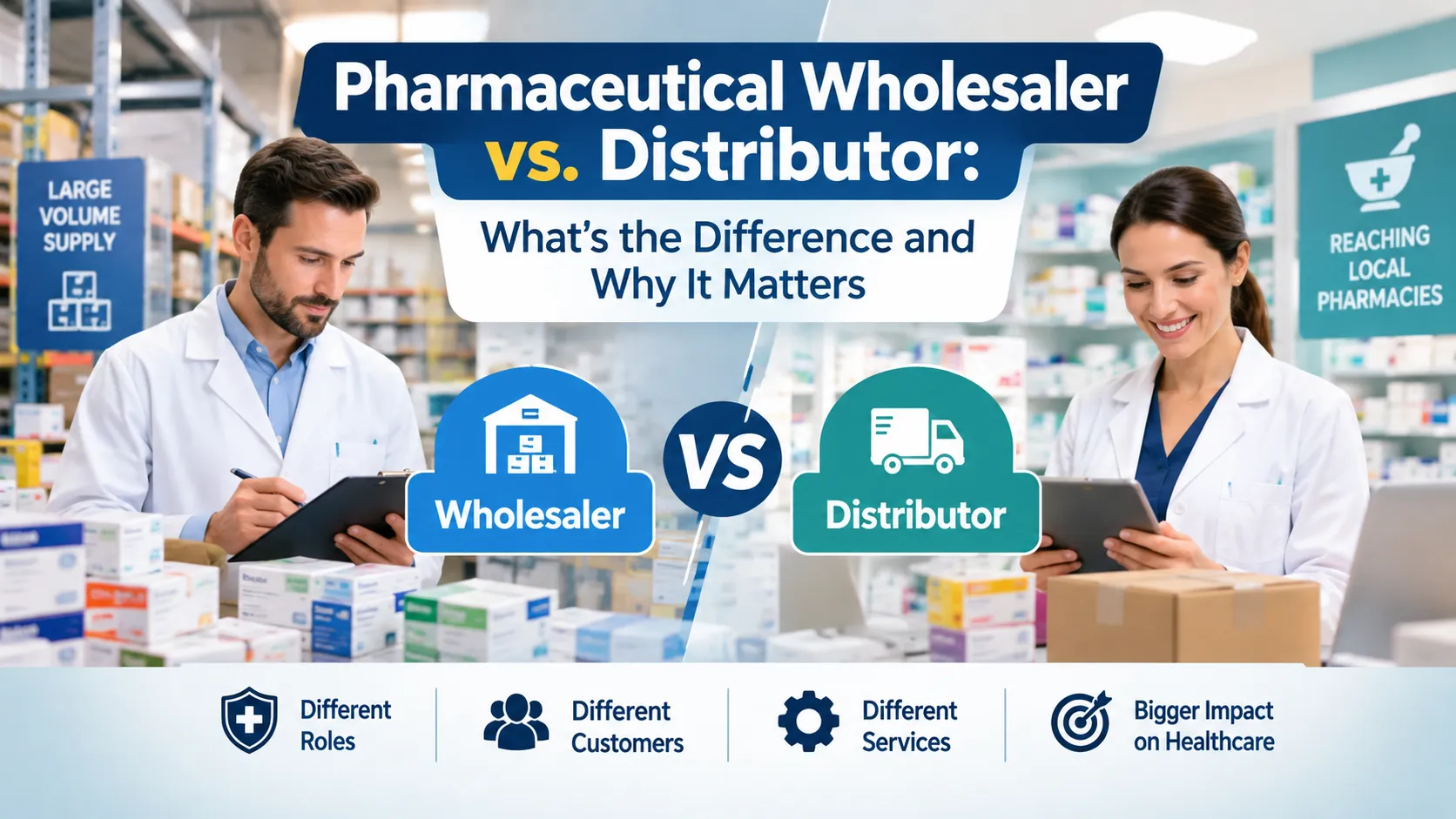

Every healthcare buyer eventually asks the same question: am I paying for a supply partner or for a middleman? The terms pharmaceutical wholesaler vs distributor get used interchangeably in procurement conversations, vendor pitches, and even regulatory filings. That confusion is expensive. The tier you buy from shapes your pricing structure, your ordering flexibility, and the cash available to run your business. Understanding the structural difference is not an academic exercise. It is a procurement decision with a direct line to your bottom line.
The Distinction Most Buyers Overlook — And What It Costs Them
Pharmaceutical wholesalers buy large volumes of drug inventory directly from manufacturers and hold that stock. They are the primary tier in the supply chain. Pharmaceutical distributors operate differently. Many function as intermediaries — sourcing from a wholesaler and reselling to end buyers. That one structural layer changes everything about the commercial relationship.
The tier you buy from determines your pricing architecture. It determines how much ordering flexibility you have. It determines your cash flow rhythm. A buyer working through a distributor is not simply getting a different delivery route. They are financing a second profit margin and absorbing the operational constraints that come with it. Most procurement teams make this decision once at onboarding and never revisit it.
How the Distributor Margin Layer Quietly Erodes Your Bottom Line
When a distributor buys from a wholesaler and resells to your organization, their margin comes directly out of your purchase price. No efficiency is gained. No additional service is created. The product travels the same supply chain. Your cost simply carries two margins instead of one.
The scale of that drag is routinely underestimated. A 3–5% distributor markup on recurring pharmaceutical purchases does not feel significant on a single invoice. Across a full fiscal year of high-volume orders, it compounds into a material cost that belongs nowhere in your budget.
The larger problem is structural opacity. Most pharmaceutical distributors do not itemize what they paid their upstream source against what they charge you. Buyers have no benchmark. They cannot negotiate against a number they cannot see. The result is a pricing relationship where the vendor holds all the information and the buyer absorbs the outcome.
That margin erosion connects directly to working capital. Every dollar flowing to an unnecessary intermediary is a dollar unavailable for inventory investment, staffing, or operational growth. The cash flow problem is not dramatic. It is quiet, consistent, and cumulative.
The Ordering Cycle Problem
Distributors impose ordering constraints that wholesalers typically do not. Minimum order quantities (MOQs) tend to be rigid. Ordering windows are often fixed to the distributor’s own replenishment schedule rather than your demand cycle.
The practical consequence is over-ordering. Buyers forced to meet an MOQ that exceeds their immediate need carry excess inventory until it turns. That inventory ties up working capital. It introduces expiry risk on time-sensitive pharmaceutical stock. It forces cash into product sitting on a shelf instead of circulating in the business.
A direct wholesale relationship adjusts to actual demand. Order sizing becomes a variable the buyer controls, not a constraint imposed by a middleman’s internal logistics.
What a True Wholesale Relationship Actually Changes
The financial case for buying closer to the wholesale tier operates on three levers simultaneously.
The first is margin elimination. Removing the distributor layer means the price you pay reflects the wholesaler’s cost structure and your negotiated rate, not a restacked margin on top of it. That difference is recoverable and immediate.
The second lever is payment terms. Established drug wholesale relationships are often structured to include Net 30 or Net 60 terms. That is a material advantage intermediaries rarely pass through to end buyers.
The third lever is tiered pricing access. Wholesalers with broad inventory and direct manufacturer relationships can offer volume-based pricing that rewards consistent purchasing. Distributors operating at the intermediate tier typically absorb those benefits rather than extending them downstream.
All three levers produce the same outcome: greater cash flow predictability. The buyer knows their cost structure. They know their payment window. Their ordering aligns with actual demand.
Why Payment Terms Are the Underrated Variable
A Net 30 or Net 60 payment term is not administrative convenience. It is interest-free short-term credit. Cash that would otherwise leave the business on delivery stays in operations for another 30 to 60 days.
Distributors operating with their own cash flow pressures — buying from a wholesaler upstream and collecting from buyers downstream — often cannot extend those terms without compressing their own margins further. The result is shorter settlement windows pushed onto the end buyer.
For independent pharmacies and mid-sized healthcare operators managing tight working capital cycles, that difference in payment structure is a meaningful liquidity variable. It belongs in every supply partner evaluation.
How to Audit Your Current Supply Partner Before It Costs You More
Run these five criteria against your current vendor before the next contract renewal.
Pricing transparency. Can your partner provide a breakdown of sourcing cost versus their margin? If the answer is no or the question is deflected, you are likely working with an intermediary.
Licensing tier. Confirm whether your partner holds a wholesale distributor license of record under applicable state and federal requirements. Licensing tier is a matter of public record.
Order flexibility. Does your partner accommodate variable order sizing aligned to your demand cycle, or do they enforce fixed MOQs tied to their own replenishment schedule?
Payment term availability. Can your partner offer net terms, or do their payment requirements reflect their own upstream cash flow constraints?
Inventory position. Does your partner hold physical stock, or are they fulfilling orders from an upstream source? Drop-shipping from a pharmaceutical wholesaler above them is a clear indicator of intermediary positioning.
This is not a one-time onboarding checklist. Supply chain structures shift. Run this audit annually.
Why the Right Wholesale Partner Is a Cash Flow Decision, Not Just a Procurement One
Most procurement teams optimize for product availability and price per unit. Those are the right variables. They are also incomplete.
The wholesaler-distributor distinction shapes the entire financial architecture of a supply relationship: margin exposure, order flexibility, payment terms, and pricing access. When that decision is made without awareness of the structural difference, the cost is absorbed silently. It shows up in working capital constraints, not in a line item anyone can point to.
Opaque distributor margins, rigid MOQs, and compressed payment windows do not create a single crisis. They create a consistent drag that compounds across every order cycle. Choosing the wrong supply tier is a financial decision made by default. The buyers who recognize that tend to make it deliberately instead.
Partner with a Wholesale Source Built for Long-Term Cost Efficiency
Supply chain decisions made at onboarding rarely get revisited — and that is exactly where the hidden cost lives. When a healthcare buyer defaults to a distributor without examining the structural implications, they absorb compounding margin layers, rigid ordering cycles, and compressed payment windows that quietly constrain growth.
Understanding the pharmaceutical wholesaler vs distributor distinction is where cost recovery begins. Drugzone Pharmaceuticals Inc. is a nationally licensed, NABP-accredited generic pharmaceutical distributor authorized in all 50 states, headquartered in Nanuet, New York, and founded by a New York-licensed pharmacist. With 2,000+ SKUs, a 20,000 sq. ft. distribution facility, and partnerships with 75+ leading generic manufacturers, Drugzone delivers pricing transparency, ordering flexibility, and compliance traceability at scale. The right wholesale relationship does not just supply product. It protects margin, extends liquidity, and removes structural drag from your procurement cycle.
Frequently Asked Questions
- How does buying from a distributor instead of a wholesaler affect my operating costs?
When you buy from a distributor, your purchase price funds two separate margins — the wholesaler’s and the distributor’s. That layered cost is not itemized on invoices, so it appears invisible. Over a full year of recurring pharmaceutical purchases, even a 3–5% distributor markup compounds into a material cost that reduces the capital available for staffing, inventory, and operations.
- Can the difference in payment terms between a wholesaler and a distributor actually impact cash flow?
Yes — significantly. Established wholesale relationships are often structured with Net 30 or Net 60 payment terms, which function as interest-free short-term credit. Distributors, managing their own upstream cash flow obligations, frequently require faster settlement. For independent pharmacies and mid-sized healthcare operators, that difference can represent tens of thousands of dollars in working capital availability across a fiscal year.
- How do I know if my current supply partner is a true wholesaler or an intermediate distributor?
Five indicators reveal the structural tier of your current vendor: whether they provide pricing transparency with a sourcing cost breakdown; whether they hold a wholesale distributor license of record; whether order sizing is flexible or tied to fixed MOQs; whether net terms are available; and whether they hold physical inventory or fulfill orders from an upstream source. If your vendor cannot answer the first and last questions clearly, you are likely working with an intermediary.
- Why do rigid minimum order quantities (MOQs) create a cash flow problem for healthcare buyers?
Rigid MOQs force buyers to purchase more product than their immediate demand requires. That excess inventory ties up working capital in stock sitting on shelves rather than circulating in the business. It also introduces expiry risk on time-sensitive pharmaceutical products. A direct wholesale relationship allows order sizing to align with actual demand cycles, keeping cash liquid and inventory lean.