
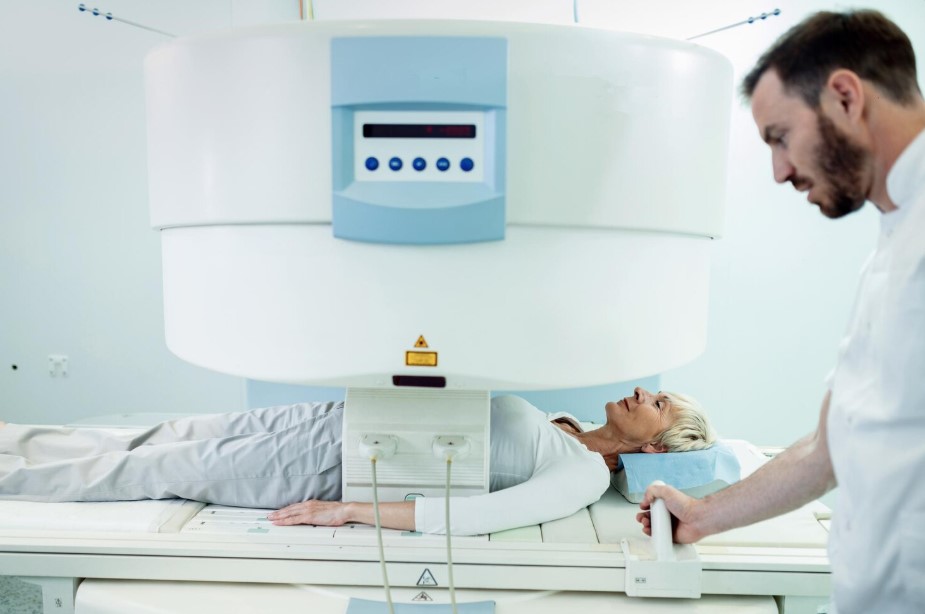

Magnetic Resonance Imaging, commonly called MRI, uses advanced imaging technology to create detailed pictures of organs, tissues, and internal body structures without using radiation. Among the different MRI techniques available, diffusion weighted imaging, often called DWI, provides additional information by examining how water molecules move within body tissues. This guide helps you learn what makes diffusion weighted MRI different from standard MRI sequences and how it supports more detailed imaging evaluation in certain medical situations.
How Standard MRI Sequences Work
Standard MRI sequences are designed to capture detailed anatomical images of the body using magnetic fields and radiofrequency signals. These sequences show the size, shape, structure, and condition of organs, muscles, nerves, and soft tissues. Different MRI settings are used to highlight specific tissue characteristics, allowing radiologists to evaluate normal anatomy and identify visible abnormalities.
Traditional MRI sequences are commonly used to examine the brain, spine, joints, abdomen, pelvis, and other body regions. They help identify swelling, inflammation, injuries, structural changes, or masses by creating highly detailed cross sectional images. While standard MRI provides excellent anatomical detail, some tissue level changes may require additional imaging techniques for clearer evaluation.
What Diffusion Weighted Imaging Measures
Diffusion Weighted MRI differs from standard MRI because it focuses on the movement of water molecules within tissues rather than only showing structural anatomy. Water movement patterns may change when tissue becomes inflamed, injured, infected, or affected by certain medical conditions. By analyzing these changes, DWI can sometimes identify abnormalities earlier than routine MRI sequences alone.
How Water Movement Helps Imaging Evaluation
Healthy tissues usually allow water molecules to move in a balanced and predictable way. When cells become damaged or densely packed, water movement may become restricted. Diffusion weighted imaging detects these differences and creates images that help radiologists evaluate tissue behavior more closely.
Why DWI Adds Extra Imaging Information
DWI provides functional information in addition to anatomical detail. This means radiologists can assess not only how tissues look but also how they behave at a microscopic level. In some situations, this additional information improves diagnostic clarity and supports earlier detection of subtle tissue changes.
Areas Commonly Evaluated Using DWI
Diffusion weighted imaging is frequently used during brain imaging, whole body MRI, abdominal scans, pelvic imaging, and certain cancer related evaluations. It may also support assessment of stroke related changes, infections, inflammation, and tissue response during follow up imaging.
Differences Between Standard MRI and Diffusion Weighted MRI
Although both imaging methods are performed during the same MRI examination, they provide different types of diagnostic information. Standard MRI focuses mainly on structure, while DWI evaluates tissue level water movement and cellular activity.
Key Differences in Imaging Purpose
- Standard MRI mainly evaluates anatomy and structural detail
- DWI focuses on microscopic water molecule movement inside tissues
- Standard sequences identify visible structural abnormalities
- DWI may detect subtle tissue changes earlier in some cases
- Both methods are often combined for more complete evaluation
How Image Appearance May Differ
- DWI images may appear brighter in areas of restricted water movement
- Standard MRI sequences display tissue anatomy more traditionally
- Radiologists compare multiple MRI sequences together for interpretation
- Additional imaging maps called ADC maps may support DWI analysis
- Different MRI settings help highlight specific tissue characteristics
In many healthcare facilities across the UAE, diffusion weighted imaging is commonly included in advanced MRI protocols because it adds valuable information without increasing radiation exposure.
Clinical Situations Where DWI May Be Helpful
Diffusion weighted imaging supports evaluation in several medical situations where tissue level changes may not be fully visible on routine MRI sequences alone. Doctors decide whether DWI is needed based on symptoms, medical history, and the area being examined.
Brain and Neurological Imaging
DWI is widely used in brain MRI because it can help identify acute stroke related changes very early. It may also support evaluation of infections, inflammation, and certain neurological conditions affecting brain tissue. Early detection can help guide timely treatment planning and medical decision making.
Whole Body and Cancer Related Imaging
In some cancer related imaging studies, DWI helps assess tissue density and may support identification of abnormal areas that require closer evaluation. It is also commonly used during follow up imaging to observe how tissues respond to treatment over time. DWI findings are usually interpreted together with routine MRI sequences and clinical assessment.
Abdominal and Pelvic Imaging
Diffusion Weighted MRI may help evaluate organs such as the liver, kidneys, pancreas, and pelvic structures by providing additional tissue level information. In some situations, it may support detection of inflammation, infections, or abnormalities that are difficult to assess clearly through standard sequences alone.
Safety and Imaging Process During DWI MRI
Diffusion weighted imaging is performed as part of a regular MRI examination and follows the same general safety principles. The scan does not use ionizing radiation, making it a commonly preferred imaging method for soft tissue evaluation and follow up studies.
What Patients Usually Experience During the Scan
- Lying still inside the MRI scanner during image acquisition
- Hearing rhythmic tapping or knocking sounds from the machine
- Wearing ear protection for comfort during scanning
- Following breathing instructions during certain body scans
- Remaining still to improve image clarity and reduce motion artifacts
Important MRI Safety Considerations
- Patients should inform staff about implants or medical devices
- Metal objects are removed before entering the MRI room
- Pregnancy status may be discussed before imaging
- Claustrophobia concerns can be addressed before the procedure
- Scan duration depends on the body area being evaluated
Some individuals may feel anxious before MRI examinations because of the enclosed scanning environment. However, healthcare providers usually explain the procedure clearly and support patient comfort throughout the imaging process.
Choosing the Right Imaging Approach for Detailed Evaluation
Diffusion Weighted MRI differs from standard MRI sequences because it evaluates water molecule movement within tissues in addition to structural anatomy. This added information can help support earlier detection of certain abnormalities, improve diagnostic clarity, and provide more detailed tissue assessment in specific medical situations. Combining standard MRI sequences with diffusion weighted imaging allows healthcare providers to obtain a more comprehensive understanding of tissue health while maintaining a safe, radiation free imaging approach for patients.