
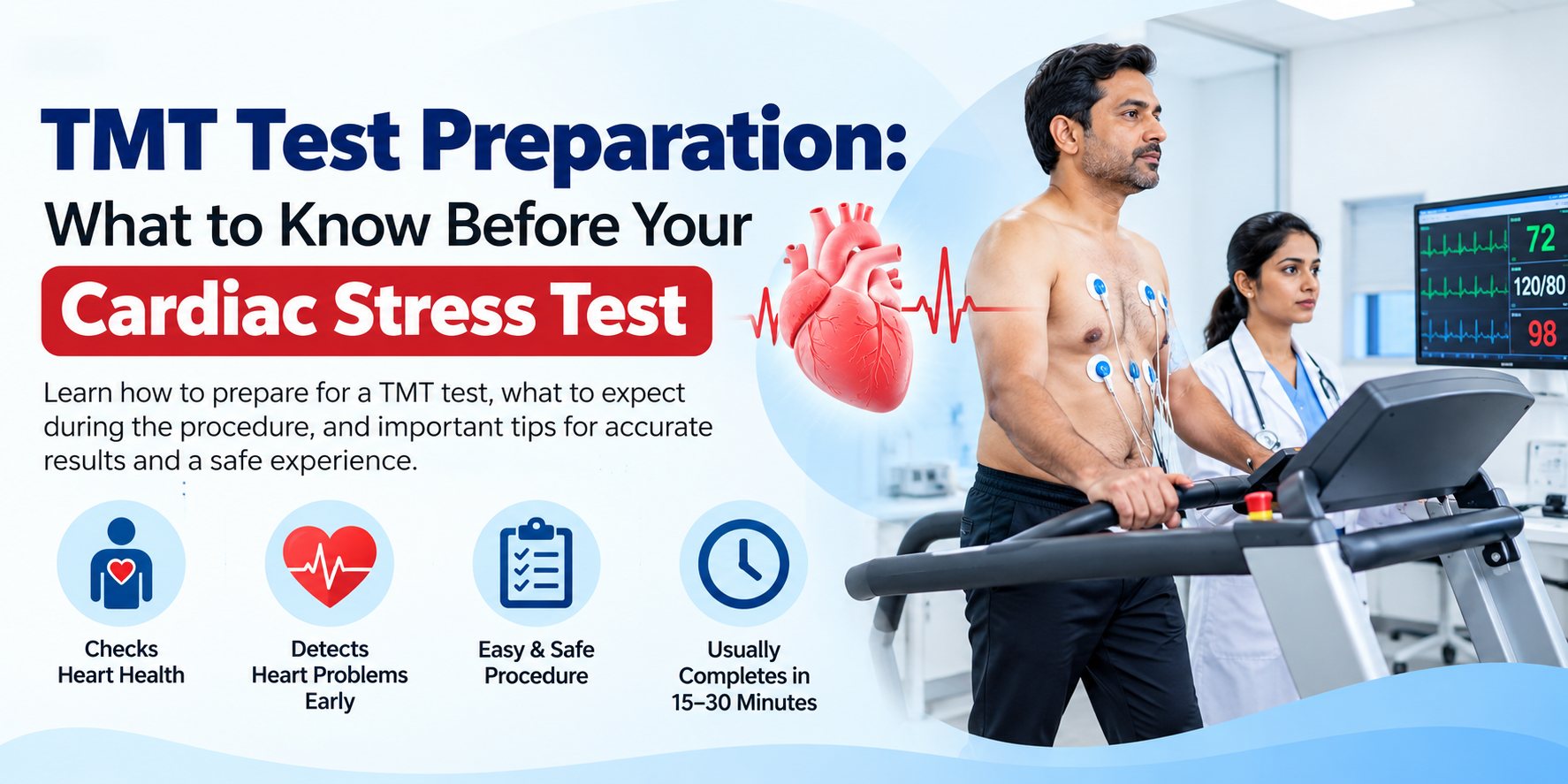

TMT Test Preparation: What to Know Before Your Cardiac Stress Test
A TMT test (Treadmill Test) is a cardiac investigation that helps doctors evaluate how the heart responds to physical activity. Proper TMT test preparation can help patients feel more comfortable and support accurate test results. Before undergoing a cardiac stress test, patients should understand the preparation instructions, what happens during the procedure, and when a doctor may recommend the test.
If you are searching online for a TMT test near me, choosing a diagnostic centre with appropriate cardiac testing facilities and trained healthcare professionals is important. Patients comparing the TMT test price in Delhi should also confirm what the test package includes before booking an appointment.
What Is a TMT Test?
A Treadmill Test, also known as an exercise stress test, evaluates the heart’s response to progressively increasing physical activity. During the test, the patient walks on a treadmill while healthcare professionals monitor the heart’s electrical activity using an electrocardiogram (ECG).
The treadmill speed and incline generally increase in stages, depending on the testing protocol and the patient’s ability to exercise. Heart rate, blood pressure, symptoms, and ECG changes are monitored throughout the procedure.
Doctors may recommend a TMT test when assessing certain heart-related symptoms, evaluating exercise tolerance, or investigating possible coronary artery disease. The test is not suitable for everyone, so the decision should be based on a doctor’s assessment.
Why Is TMT Test Preparation Important?
Following the recommended preparation instructions can help patients complete the test safely and reduce avoidable interruptions. Preparation also allows the medical team to assess relevant health conditions and medications before exercise begins.
Here are some important things to know before your appointment.
1. Wear Comfortable Clothing and Shoes
Choose loose-fitting clothing that allows you to walk comfortably. Wear supportive walking or sports shoes suitable for treadmill exercise.
Avoid footwear that may slip or make walking difficult. Comfortable clothing can help you move more naturally during the test.
2. Follow Instructions About Food and Drinks
Your diagnostic centre or doctor may ask you to avoid eating for a specified period before the test. Instructions can vary depending on the facility and your medical condition.
Avoid heavy meals immediately before exercise. Ask your healthcare provider whether you should avoid tea, coffee, energy drinks, or other caffeinated beverages before the appointment.
Patients with diabetes should obtain specific advice about food intake and medication to reduce the risk of low blood sugar.
3. Discuss Your Medicines With Your Doctor
Certain medicines, including beta-blockers and other heart medications, can influence heart rate and the interpretation of exercise stress testing.
Tell your doctor about all prescription medicines, over-the-counter medicines, and supplements you take. Never stop or change a prescribed medicine on your own. Your doctor will explain whether any medication adjustment is necessary before the test.
4. Avoid Strenuous Exercise Before the Test
Follow the centre’s instructions regarding physical activity before your appointment. Avoid exhausting workouts immediately beforehand unless your doctor advises otherwise.
Arrive with enough time to complete registration and preparation without rushing.
5. Share Your Medical History
Inform the healthcare team if you have a history of heart disease, high blood pressure, diabetes, breathing difficulties, or problems with walking or balance.
Also report any recent chest discomfort, dizziness, fainting, or unusual breathlessness. The team needs this information to determine whether the test can proceed safely.
What Happens During a TMT Test?
Understanding the procedure can reduce anxiety, especially for patients undergoing their first cardiac stress test.
Step 1: Initial assessment
The healthcare professional reviews your medical history and checks your resting heart rate and blood pressure.
Step 2: ECG electrode placement
Small electrodes are attached to your chest to record the heart’s electrical activity.
Step 3: Walking on the treadmill
You begin walking at a comfortable pace. The speed or incline gradually increases according to the testing protocol and your tolerance.
Step 4: Continuous monitoring
The medical team monitors your ECG, heart rate, blood pressure, and symptoms throughout the exercise period.
Step 5: Recovery monitoring
After exercise stops, your heart rate, blood pressure, and ECG are monitored during recovery.
The test may be stopped if you develop concerning symptoms, significant ECG changes, an abnormal blood pressure response, or reach the appropriate endpoint. Patient safety remains the priority throughout the procedure.
Who May Need a TMT Test?
A doctor may recommend a TMT test for selected patients in situations such as:
-
Evaluating certain types of chest discomfort.
-
Assessing exercise tolerance.
-
Investigating suspected coronary artery disease when exercise ECG testing is appropriate.
-
Evaluating symptoms such as breathlessness during physical activity.
-
Assessing the heart’s response to exercise as part of a broader cardiac evaluation.
A TMT test is not appropriate for every patient. For example, some people with acute cardiac symptoms, certain heart conditions, or an inability to exercise safely may require a different investigation. A cardiologist can recommend the most suitable test.
TMT Test Price in Delhi: What Should You Check?
The TMT test price in Delhi may vary depending on the diagnostic centre, the services included, and the reporting arrangements. Before booking, request the current price and clarify whether the quoted fee includes the complete test and report.
Consider these factors when comparing prices:
|
Factor |
What to Confirm |
|---|---|
|
Test procedure |
Whether the treadmill exercise test and ECG monitoring are included |
|
Medical supervision |
Whether qualified healthcare professionals supervise the test |
|
Reporting |
Whether the interpretation and final report are included |
|
Additional charges |
Whether consultation or other investigations cost extra |
|
Appointment availability |
Whether you need to book in advance |
Rather than choosing a facility based on price alone, consider the suitability of its cardiac testing services, the clarity of its preparation instructions, and the availability of appropriate medical supervision.
How to Find a TMT Test Near Me
When searching for a TMT test near me, convenience is important, but the quality and suitability of the service also matter.
Use these steps to select a diagnostic centre:
-
Check service availability: Confirm that the centre offers Treadmill Testing and ask about appointment timings.
-
Ask about preparation: Request clear instructions regarding food, drinks, exercise, and medication.
-
Confirm medical supervision: Ask how patients are monitored during exercise and what safety arrangements are available.
-
Check report timing: Find out when the report will be ready and how you can access it.
-
Verify the complete price: Ask whether the test, monitoring, and reporting are included in the quoted fee.
Patients in Delhi can contact City X-Ray & Scan Clinic to enquire about available diagnostic services, appointment arrangements, and pricing. Confirm TMT test availability at the preferred location before visiting.
Is a TMT Test Safe?
A TMT test is commonly performed when clinically indicated and with appropriate medical supervision. However, exercise places additional demands on the heart, so complications, although uncommon, can occur.
The healthcare team assesses your suitability before starting the test and monitors you during exercise. The test may not be recommended in certain circumstances, including some acute cardiac conditions.
If you experience new or severe chest pain, severe breathlessness, cold sweating, or faintness before your scheduled appointment, seek urgent medical attention instead of waiting for a routine stress test.
What Happens After the TMT Test?
After exercise, the medical team monitors you until your condition is considered stable. Many patients can resume their usual activities afterward, depending on the instructions they receive.
A doctor interprets the findings alongside your symptoms, medical history, and other investigations. An abnormal result does not automatically confirm coronary artery disease, and a normal result does not exclude every possible heart condition. Additional investigations may be recommended when clinically necessary.
Book a TMT Test at City X-Ray & Scan Clinic
Preparing properly for a cardiac stress test starts with understanding your doctor’s instructions and choosing an appropriate diagnostic facility. Wearing comfortable shoes, discussing your medicines, following food and drink guidance, and sharing your medical history can help you prepare for the appointment.
If you are looking for a TMT test near me or in Delhi, contact City X-Ray & Scan Clinic to enquire about service availability, appointment details, preparation requirements, and the current charges.
Always consult your doctor to determine whether a TMT test is suitable for your symptoms and medical condition.
Frequently Asked Questions
1. How should I prepare for a TMT test?
Wear comfortable clothing and walking shoes, follow the centre’s instructions about food and drinks, and discuss your medications with your doctor. Share any relevant symptoms or medical conditions before the procedure.
2. Can I eat before a TMT test?
You may be asked to avoid food for a specified period before the test. Follow the instructions provided by your diagnostic centre, especially if you have diabetes or take medicines that require food.
3. Should I stop taking heart medicines before a TMT test?
No. Do not stop prescribed medicines without medical advice. Your doctor will decide whether any medication adjustment is needed.
4. What is the TMT test price in Delhi?
The price varies by diagnostic centre and the services included. Contact the centre directly for its current charges and confirm whether ECG monitoring and reporting are included.
5. Where can I find a TMT test near me?
Search for diagnostic centres offering treadmill stress testing in your area. Confirm test availability, medical supervision, appointment timings, and preparation instructions before visiting.
6. How long does a TMT test take?
The exercise portion generally lasts several minutes, depending on the protocol and the patient’s response. Registration, preparation, and recovery monitoring increase the total appointment time.
7. Is a TMT test painful?
The test is generally not painful, although you may experience tiredness, sweating, or breathlessness during exercise. Tell the medical team immediately if you experience chest discomfort, dizziness, or unusual symptoms.
8. Does an abnormal TMT result mean I have heart disease?
Not necessarily. An abnormal result requires clinical interpretation and may lead to further testing. Your doctor will consider your symptoms, risk factors, ECG findings, and other relevant information.